Classic Family Board Games: What to Set Up First
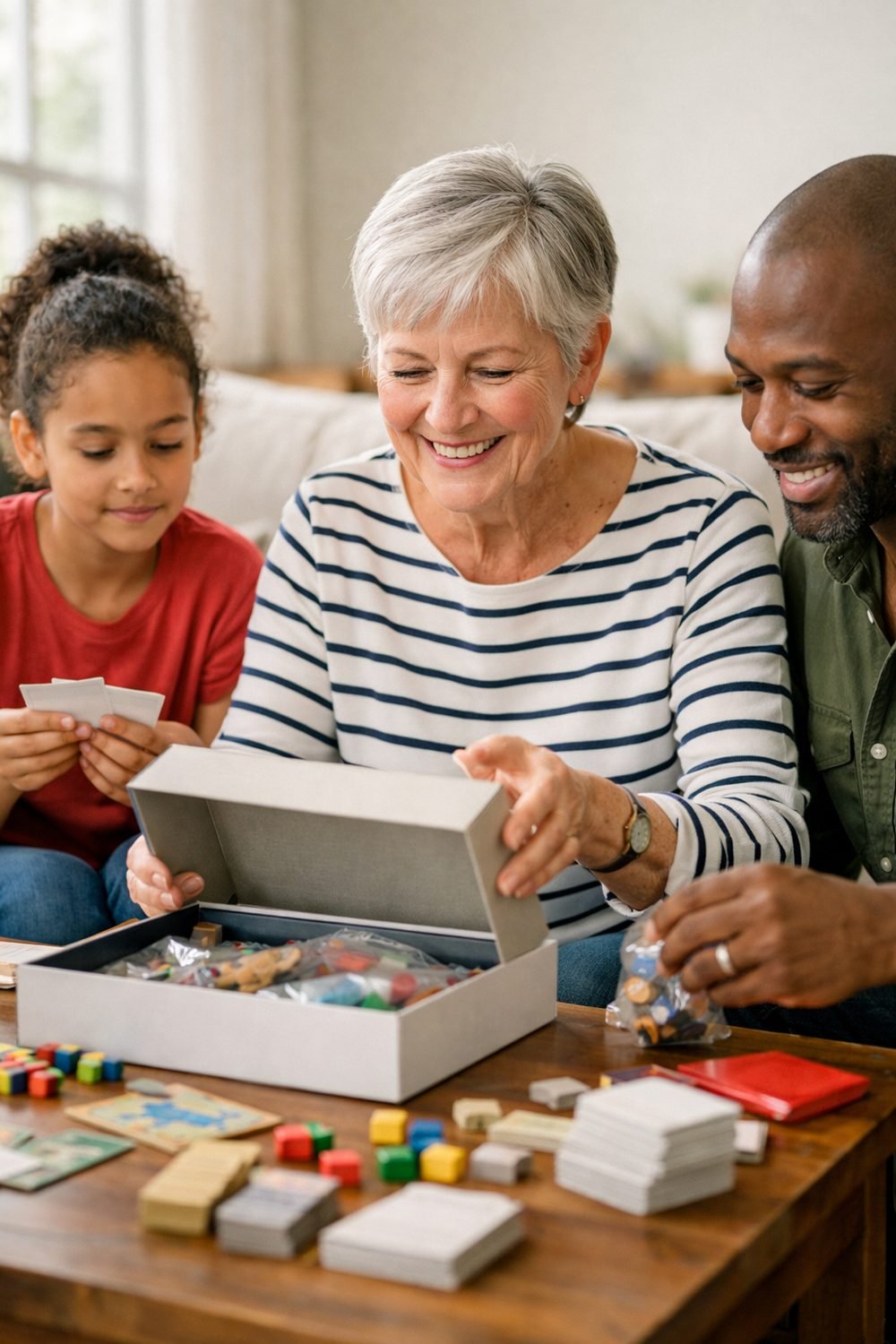
Classic family board games are easy to teach and easy to share. That's most of their charm. You don't need a rulebook the size of a phone book, and you don't need to watch a video tutorial before your kids can play. You open the box, deal some cards or set out some pieces, and you're off.
Still, "classic" doesn't always mean "good first pick." A common mistake is pulling out a full game of Monopoly on a school night, when it can easily run for hours. Two hours later, one kid was crying, one was asleep on the couch, and I was still trying to figure out who owned Park Place. Nobody asked for a second game night for about a month.
This guide is what I wish I'd known then. It covers which classic games to set up first, how to start a regular game night that sticks, and what to skip until your crew is ready for it.
Short on time? Our top picks: Uno, Connect 4, Yahtzee and Guess Who?. See all picks
Quick summary
- Start with short games (15 to 30 minutes) so the night ends before anyone gets tired or cranky.
- Pick games where younger players can keep up without a lot of reading or strategy.
- Card games like Uno and dice games like Yahtzee are cheap, small, and great starters.
- Save long games like Monopoly and Risk for weekends, once everyone already likes game night.
- Set a regular day and keep it simple: same night, same spot, same snack if you like.
- Have a plan for sore losers before the first game, not during it.
- Rotate who picks the game so everyone feels it's their night too.
Why Classic Family Games Make the Best Starting Point
There are a lot of newer board games out there now, and some of them are wonderful. But when you're trying to get a family into the habit of playing together, the old standbys have a few real advantages.
Someone already knows how to play
This is the big one. If you bring out Uno, there's a good chance a grandparent, an older cousin, or at least one parent has played it before. That means you're not all learning from scratch. Someone can say "here's how it works" and you're playing in two minutes.
They're easy to find
Most classic games show up at regular big-box stores, in thrift shops, and at yard sales. A perfectly good checkers set can often be found at a church rummage sale. If you're checking a used game, just count the pieces before you buy, or at least before you play. Missing a few cards in a deck can be fixed. Missing the one Clue weapon everyone wants to be is a sadder problem.
The rules are short
Short rules mean fewer arguments. In a game like Connect 4, there's really only one rule: get four in a row. Kids can't twist that around much, though mine have tried.
The First Board Games for Family Night I'd Set Up
If I were starting over with a brand new game night, these are the ones I'd put on the table first. They're quick, they're forgiving, and they work as family board games for all ages.
Uno
Uno is the one I'd start with almost every time. Kids who know colors and numbers can play. It moves fast, there's a bit of luck so little ones can win against adults, and the "Draw Four" card gives everyone something to laugh or groan about. It's also tiny, which makes it one of the easiest travel board games for family trips to grandma's house or a hotel room.
One honest note: lots of families play with "house rules" like stacking draw cards. That's fine, but agree on them before you start. More on that later.
Connect 4
This one is great for two players, especially a parent and a younger child. Games take a few minutes, so you can play best of five without anyone getting bored. Little kids love dropping the checkers in and pulling the lever at the end to let them all fall out. Honestly, that part might be the real game for a four-year-old.
Yahtzee
Yahtzee is a nice step up. It uses dice and a score sheet, so there's some adding involved. That makes it good for kids who are learning math, though an adult or older kid may need to help with scoring at first. It's also one of those games where everyone is cheering for everyone else's rolls, which keeps the mood friendly.
Guess Who?
A two-player game where you ask yes-or-no questions to figure out the other person's mystery character. It teaches kids to think about which question cuts out the most faces. It's quick and it gets kids talking, which I like a lot more than silent staring at a board.
Jenga
Jenga is not a board game, I know. But it's a classic, it needs zero reading, and the moment the tower falls is pure drama. It's a good one when you have a mix of ages, or when friends drop by and you want something everyone already understands.
Comparing the Best Family Board Games by Age and Time
Here's a rough way I think about these. Ages on the box are a guide, not a law. Check the box or the seller's page for the official age range, but also trust what you know about your own kids.
For the youngest players
Candy Land and Chutes and Ladders are pure luck. There are no real decisions, which sounds boring to adults (it is, a bit), but that's exactly why little kids like them. Nobody can "out-think" a four-year-old, so they win as often as you do. If your youngest is just learning to take turns, these do the job.
For early readers and school-age kids
Uno, Sorry!, Trouble, Guess Who?, and Connect 4 fit here. They add small choices, like which card to play or which pawn to move, without making it feel like homework. Sorry! in particular gives kids a chance to send your pawn back to start, and they will enjoy that far more than they should.
For older kids and teens
Clue, Scrabble, Yahtzee, checkers, and chess. These take more thinking and a bit more patience. Clue is a family favorite in a lot of houses and one of the best family strategy board games for this age, because it feels like solving a mystery together, even though you're competing. Scrabble can be lopsided if one person has a big vocabulary, so some families let younger players use a dictionary.
Time matters more than you think
On a school night, I'd aim for games that wrap up in about 20 to 30 minutes. That gives you time for two rounds, which is nice because someone who lost the first game gets a shot at a rematch. Longer games are better on a lazy Saturday afternoon.
Games I'd Wait On (Yes, Including Monopoly)
Monopoly is a little overrated as a family starter. It's a classic for a reason, and plenty of people love it. But it can run for hours, players get knocked out early and then just sit there, and the end can drag on while one person slowly bankrupts everyone. That's a lot to ask of a seven-year-old on a Tuesday.
That doesn't mean skip it forever. It just means wait until game night is already a habit and everyone wants to be there. Then try it on a weekend, maybe with a time limit. Some families just set a timer and whoever has the most money and property when it goes off wins. That trick saved Monopoly at our house.
Other "save for later" games
- Risk: long, very strategic, and it can get personal fast.
- Chess: wonderful, but better taught one-on-one than as a whole-family game night pick.
- The Game of Life: fun, but there's a lot of setup and a lot of little pieces and money to sort.
By the way, if you're thinking about games as holiday or birthday gifts, our Free Holiday Gift List and Budget Page can help you keep track of who's getting what and how much you're spending.
How to Start a Regular Game Night
The game matters less than you'd think. What makes game night last is the routine around it.
Pick one night and stick to it
We landed on Friday nights because nobody has homework hanging over them and nobody has to wake up early. Your best night might be Sunday, or even a weekday after dinner. What helps most is that it's the same night each week, so it starts to feel normal instead of like a special event someone has to remember.
Keep the setup easy
If you have to clear off a table covered in mail, laundry, and art projects every single time, you'll start skipping it. Find one spot that can be cleared quickly. The kitchen table works. So does the living room floor with a blanket down. We've played Uno on a bed more than once.
Make it feel like a treat
A small snack goes a long way. Popcorn is our go-to because it's cheap and easy. Some families do pizza on game night. Just keep sticky or greasy food away from cards and paper score sheets, or you'll be peeling Uno cards apart for years.
Put phones somewhere else
This one's for the adults as much as the kids. It's easy to fall into checking your phone between turns. Leaving your phone in the kitchen can make games more fun, because you're actually paying attention. Kids notice when you're half there.
Teaching a New Game Without Losing Everyone
Teaching is where a lot of game nights go wrong. Someone reads the whole rulebook out loud while everyone else fidgets, and by the time you start, half the table has checked out.
Learn it yourself first
If you're bringing out a game nobody knows, read the rules earlier in the day. Even better, play a quick round by yourself. It sounds silly, but ten minutes of practice means you can explain it in two.
Explain the goal first
Start with "here's how you win." Then explain what you do on your turn. Skip the rare rules until they come up. Kids don't need to know every edge case before the first card is played.
Play an open practice round
For card games, I like to play the first round with everyone's cards face up. That way I can say "oh, you could play that one" and kids learn by seeing it. Once it clicks, flip the cards back over and play for real.
Handling Winning, Losing, and Hurt Feelings at Family Gatherings
Every family has at least one sore loser. Sometimes it's a kid. Sometimes, if I'm being honest, it's me. Planning for it ahead of time makes a huge difference.
Talk about it before the game
A quick "remember, we say good game to whoever wins" before you start is easier than trying to calm someone down mid-meltdown. Keep it light. You're not giving a lecture, just a reminder.
Should you let kids win?
People have strong opinions here. With very young kids, luck-based games solve most of this, because they'll win fairly on their own sometimes. As kids get older, I think it's kinder to play for real but maybe give tips or a small head start. Kids usually figure out when you're throwing a game, and the win feels less special to them.
Try a team game
Pairing a younger kid with an adult or older sibling can help a lot. In Clue or Yahtzee, a team of two shares the score. The younger player still feels part of it, and losing hurts less when you lose together.
Keeping Family Game Night Fresh Over Time
After a few months, you might notice energy dropping. Same games, same results, same kid winning every Connect 4 match. That's normal, and it's easy to fix.
Rotate who picks
Let a different person choose each week. It gives everyone a turn to feel in charge, and it stops one person's favorite from taking over. Even if the youngest picks Candy Land four weeks straight, it's their week, and the rest of you will survive.
Add one new game at a time
Don't buy five new games at once. Add one, play it a few times, and see if it sticks. Classic games make good gifts for birthdays and holidays, so you can slowly build a shelf without spending a lot at once.
Try simple variations
Many classic games have well-known variations. Play Yahtzee with a "triple score" final round. Play Scrabble where any word counts as long as you can explain what it means. Just keep the changes simple and agree on them first.
Common Mistakes
These are common mistakes, so there's no judgment here.
- Starting with a long game. Monopoly or Risk as a first game night can turn people off the whole idea. Go short first.
- Not agreeing on house rules. Uno is famous for this. One person stacks Draw Twos, another doesn't, and suddenly there's an argument. Settle it before you deal.
- Picking games only the adults like. If the kids are bored, they'll stop wanting to play. Mix in games they enjoy, even if you find them a little dull.
- Playing too late. Tired kids are cranky losers. Start earlier than you think you need to.
- Making it feel like a chore. If game night becomes "you have to play," it stops being fun. Keep it relaxed. If someone really isn't up for it one week, that's okay.
- Losing pieces and never replacing them. A missing die or card adds up. Keep a small zip bag in each box for loose parts, and check after each game.
- Buying too many games too fast. A full shelf you never touch isn't better than three games you play every week.
Classic games worth putting on your shelf
These are well-known picks that match the starter games in this guide. Check the box or product page for the age range and contents before you buy.
Uno
A good fit for families with mixed ages who want a quick, easy-to-teach card game. Check which edition you're buying and agree on house rules before the first hand.
Connect 4
Suits parents playing one-on-one with a younger child. Look at the age range on the box, since the small discs need watching around toddlers.
Yahtzee
Works for families with kids who are starting to add up scores. Check that you have enough score sheets, or plan to have an older player help keep score.
Guess Who?
A friendly two-player pick for kids who like asking questions and puzzling things out. Check that the character cards are in good shape if you buy it used.
Jenga
Suits groups with a wide mix of ages, since there is no reading and the rules are short. Think about where you'll play, because it needs a flat, steady surface.
Clue
Good for older kids and teens who enjoy a mystery and some thinking. Count the pieces and cards if buying secondhand, and check the age range on the box.
Sorry!
Fits school-age kids who are ready for small choices without heavy strategy. Be ready for a bit of friendly payback, since sending pawns home is part of the fun.
Check current plans and prices on each brand's own site before you buy.
FAQ
What's the best classic game for a family with very different ages?
Uno is hard to beat because it's mostly simple matching with a little luck mixed in. Jenga is another good choice since there's no reading and anyone can join. Both let a five-year-old and a grandparent play together without anyone feeling left out.
How long should a family game night last?
For most families, about 30 to 60 minutes is plenty, especially on school nights. That's enough for one or two short games without anyone running out of steam. You can always go longer on weekends once everyone's into it.
Are used board games worth buying?
They can be, especially classics that are easy to find secondhand. Just check that all the pieces are there, or that missing pieces are easy to replace. For anything with small parts and young kids around, take a close look at condition first.
What if my kids would rather be on screens?
That's really common, so don't feel bad about it. Start small with one short game, a fun snack, and no pressure to keep going if it flops. Letting them pick the game often helps more than anything else.
If you're planning to give a classic game as a gift this year, or just want to keep holiday spending in check, grab the Free Holiday Gift List and Budget Page when you join our email list. It's a simple way to jot down gift ideas for everyone on your list, games included, and see your budget in one place. Then pick one short game from this guide and try it this week. One round of Uno is a fine start.
1. Pick one night
Same day each week.
2. Pick a game
Check the age range on the box.
3. Prepare the space
A clear table and good light.
4. Read the rules once
Keep a one-page summary.
5. Keep snacks simple
Choose clean, low-mess food.
6. Read the offer page
Check the seller's current terms. Results vary and many people earn little at first.
Ready to look?
This is a link to an offer from another seller. Check the seller's page for current terms.
Want a printable to keep track while you work? Get our free holiday gift list and budget page.