Top Rated Family Board Games: A Plain-English Guide
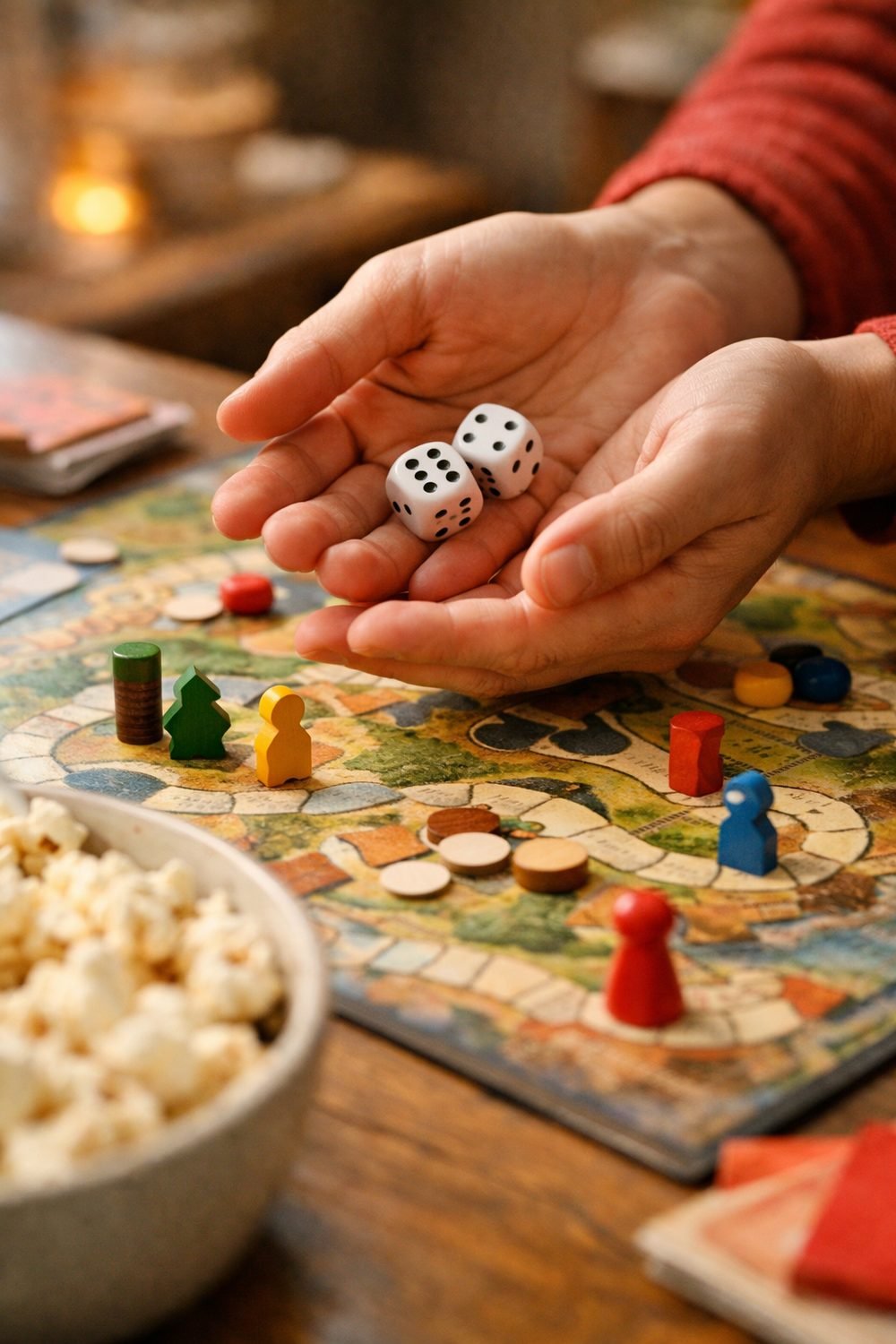
Here's something people often learn the hard way: a game with thousands of glowing reviews can still flop at your kitchen table. Say you buy one of the top rated family board games, a highly rated strategy game, for a family night. The younger kids may be bored in ten minutes, a grandparent may give up on the rulebook, and everyone may end up playing cards instead. The game wasn't bad. It just wasn't right for us.
Ratings are one input. Your own family is the other. This guide is about using both, so the game you pick actually gets played instead of sitting on a shelf with the plastic still on.
This guide won't hand you a "best games" list with made-up scores. This guide shows how to read ratings like a careful shopper, what to check before you buy, and which mistakes to skip. Then you can look at any good family board games list and decide for yourself.
Short on time? Our top picks: Ticket to Ride, Catan, Pandemic and Codenames. See all picks

Quick summary
- Read several ratings and focus on the written comments, not only the star count.
- Check the stated age and compare it to your youngest player, not your oldest.
- Look for a quick-start rule or simple setup guide. It makes first plays far easier.
- Check game length and match it to how much time your evenings really have.
- Watch for missing pieces by reading recent comments about the box contents.
- Note the return terms exactly as listed on the seller's page before you pay.
- Think about player count so nobody ends up sitting out.
Why star ratings only tell half the story for top rated family games
A star rating is an average. That's useful, but it hides a lot. A game might score high because serious hobby players love it, while families with young kids find it too slow. Both groups are right. They just want different things.
Who is doing the rating?
When I read reviews, I try to picture the person writing them. Are they talking about game nights with adult friends? Playing with a seven-year-old? Teaching grandparents? A review that says "deep and rewarding, with tons of choices" sounds great, but at a family table that can often mean "long and confusing for the kids."
Look for reviewers who sound like your family. If you see a few comments mentioning kids around your children's ages, that's worth more than a hundred general five-star ratings.
High ratings vs. many ratings
A game with a near-perfect score from a handful of people is a gamble. A game with a slightly lower score from a big pile of reviewers is usually a safer bet, because you can see patterns. The second one is usually the safer pick.
Read several ratings, and read the words
This is the habit that's saved me the most money. Before buying, I read at least a few reviews from each star level. Yes, even the one-star ones.
What to look for in good reviews
The best positive reviews tell you why the game worked. Watch for details like:
- Kids often ask to play again the next night when a game is quick to learn and easy to reset.
- "We learned it in about the time it takes to make popcorn."
- "Works well even when someone's way behind."
That last one matters more than people think. Games where one player falls far behind early can end in tears, especially with little ones.
What the bad reviews can tell you
Low ratings are often about things that don't apply to you. Someone might complain the game is "too simple," which could be exactly what you want. Others point out real problems, like flimsy cards or confusing instructions. Sort the complaints into "matters to me" and "doesn't."
Honestly, I find the three-star reviews the most useful. They tend to be balanced, listing what's good and what's annoying in the same breath.
Check the stated age on family friendly board games against your youngest player
The age on the box is a guide, not a rule. But it's a good starting point, and I always compare it to the youngest person who'll actually play.
Why the youngest player sets the pace
If your youngest is six and the box says ten and up, you'll probably spend the evening explaining, helping, and quietly bending the rules. Some families enjoy that. Many don't. It's usually easier to pick a game slightly below the oldest player's level than way above the youngest's.
Reading between the lines on age
Age ratings often reflect reading level, small parts, or how long a child can focus. A game might be simple to play but need lots of reading on cards. Reviews help here. Search the comments for mentions of reading, and you'll quickly learn whether a non-reader can join in.
For safety questions, like small pieces around toddlers, check the labels and warnings on the seller's page. Don't guess.
Look for a quick-start rule
The first play of any game is the hardest. Everyone's excited, the box is open, and then someone has to read eight pages of rules out loud while the snacks go cold.
What a quick-start guide looks like
Some games come with a short "learn as you play" sheet or a simple first-game setup. These are wonderful. You can start playing within minutes and pick up the finer rules as you go. Reviews often mention this, so look for phrases like "easy to teach" or "we were playing in minutes."
If there isn't one
Don't panic. A good trick is to read the rules alone the night before, then explain them in your own words. You can skip the rare edge cases until they come up. Families don't need every rule on turn one. They need to know what to do on their turn and how to win.
Check game length and match it to your evenings
This is where I see the most mismatches. A box that says "60 minutes" often means 60 minutes for people who already know the game. Your first try could easily take longer.
Real time vs. box time
Read reviews for honest playing times. People will say things like "took us way longer the first time" or "games are quick once you know it." That second comment is a good sign.
Then think about your actual evenings. On a school night, we've got maybe half an hour after dinner before bedtime chaos starts. A long game just won't happen. Weekends or holidays are different.
Short games are underrated
Short games are underrated. A twenty-minute game you play three times in a row is more fun than a two-hour game nobody wants to finish. Short games also handle mood changes better. If someone loses, they can try again right away instead of sulking through the rest of the night.
If you're building a holiday shopping plan around games and other gifts, our Free Holiday Gift List and Budget Page can help you keep track of who's getting what without overspending.
Think about player count for family game night before you fall in love
This one sneaks up on people. A game can look perfect until you notice it plays two to four, and your family has five.
The "best with" number
Many games technically support a range of players but shine at one specific number. Reviews often say things like "great with four, dull with two." Pay attention to that. If you mostly play as a family of three, find a game that people praise at three.
Comparing classic family board games and other styles for groups
Here's a rough way I think about game types when choosing fun family board games:
- Party and word games usually handle bigger groups well and suit mixed ages. They can feel thin for a small group, though.
- Cooperative games, where everyone works together against the game, are great for families with kids who hate losing. Watch out for one bossy player taking over.
- Classic competitive games work for smaller groups and older kids. They can get heated.
- Quick card games travel well and fill short gaps. Some get repetitive over time.
No style is "best." I keep a mix at home because our mood changes from night to night.
Watch for missing pieces and quality problems
Nothing kills a game night faster than opening a new box and finding a missing die or a torn board. It happens more often than you'd hope.
Read the recent comments
Older reviews might describe a version of the game that's since been changed. Sort reviews by newest and skim the last few weeks or months. If several people mention missing parts, warped boards, or cards that don't match the rules, take that seriously.
Check the box as soon as it arrives
It's tempting to wait for game night. Don't. Open it within a day or two, punch out the pieces, and count everything against the contents list in the rulebook. If something's missing, you want to find out while you still have time to sort it out. It's a dull ten minutes, but it beats discovering a problem on Christmas morning.
Note the return terms on the seller's page
Store return policies differ and they change, so check the current one yourself. What I will tell you is to read it yourself before you buy.
Things worth checking
- How many days you have to return or exchange it
- Whether opened games can be returned at all
- Who pays for return shipping
- What to do if pieces are missing or damaged
For gifts, I also check whether the seller offers gift receipts. That way, if Grandma already owns the same game, she can swap it without any awkwardness. If anything on the seller's page is unclear, contact them and ask before you order.
Picking a game as a gift
Buying great family board games as a gift for someone else's family adds a twist. You don't always know their kids' ages, how long their evenings are, or what they already own.
Ask sneaky questions
It helps to ask casually. "What do the kids do on rainy days?" or "Do you guys ever play games together?" tells you a lot. If they mention puzzles, a cooperative game might land well. If they mention lots of loud arguing over cards, a fast competitive game could be a hit.
Personal touches
Sometimes I pair a game with something small and personal, like a handwritten "family game night" voucher. If you're weighing a game against other personal gift ideas, the Personalized Gifts Buyer's Guide and Comparison Sheets below this post lay out options side by side, which can be handy when you're stuck between choices.
Common mistakes
These mistakes are common, so no judgment here.
- Buying for the oldest player. The game ends up too hard for the younger ones, and they drift away from the table.
- Trusting the box time. First games almost always run longer. Plan for that.
- Only reading five-star reviews. You miss the warnings about quality and boring stretches.
- Ignoring player count. Someone ends up "helping" instead of playing, and they know it.
- Waiting to check the contents. By the time you notice a missing piece, the return window might be closed.
- Buying only the most popular family board games. A hugely hyped game isn't automatically a family game. Some are built for experienced hobby players.
- Teaching every rule up front. Kids zone out. Teach the basics and fill in the rest as you go.
The one I'd watch most closely is the popularity trap. Hype is loud. Your family's actual habits are quieter, but they matter more.
Family board games worth a look
These are well-known games that families often put on their shortlists. Use the checks above to decide whether each one fits your table.
Ticket to Ride
A friendly route-building game that suits families with older kids who can read place names and plan ahead. Check the age on the box against your youngest player and read recent reviews about how long a first game takes.
Catan
A classic trading and building game that suits families who enjoy some negotiation. Check the player range and read comments about game length, since first plays can run long.
Pandemic
A cooperative game where everyone works together, which can suit kids who dislike losing to each other. Watch for one confident player taking over, and check the stated age against your youngest player.
Codenames
A word-clue party game that suits bigger groups and mixed ages. Check whether your younger players read well enough to join in, and see what reviewers say about playing with fewer people.
Uno
A quick, familiar card game that suits short evenings and gaps between activities. It can get repetitive over time, so think of it as a handy extra rather than your only game.
Sushi Go!
A short card-drafting game that suits families who want something quick and easy to teach. Check the player count and read reviews on how well it works with your group size.
Qwirkle
A tile-matching game that suits families who like simple rules without much reading. Check the stated age and see what reviews say about how well it holds up for adults too.
Check current plans and prices on each brand's own site before you buy.
FAQ
How many reviews should I read before buying a family board game?
Aim for at least a handful of reviews from each star level, focusing on recent ones. You're looking for patterns, not one person's opinion. If the same praise or complaint shows up again and again, it's probably real.
Are family board games for all ages really okay for younger kids?
Sometimes, especially if the age is about reading rather than difficulty. Check reviews for mentions of younger players, and look at the seller's page for any safety warnings about small parts. When in doubt, pick a game closer to your youngest player's age.
Are cooperative games better for families?
They can be great, especially for kids who struggle with losing. Everyone wins or loses together, which takes the sting out. Just watch for one person making all the decisions, and give everyone a turn to lead.
What if my family doesn't usually play board games?
Start short and simple. A quick game that takes twenty minutes or so is much less of an ask than a long evening commitment. If you want a low-pressure start for a holiday gathering, the Christmas Party Games Printable Pack below this post is an easy way to test the waters.
Your next step
Pick one or two games you're curious about and read their reviews with fresh eyes. Check the age, the time, and the player count against your real family. Then read the return terms before you buy. If you're planning gifts for the season, grab the Free Holiday Gift List and Budget Page first so you can keep everything in one spot. After that, take a look at the products below this post if they fit what you need. And whatever you choose, open the box early and count those pieces.
Printables and tools that can help
Personalized Gifts Buyer's Guide and Comparison Sheets
A printable guide and comparison sheets to write down what matters to you before you look at any seller...
See detailsChristmas Party Games Printable Pack
Printable bingo and other party games for a family Christmas...
See details