Holiday Gift List: Plan, Budget and Wrap
Published 2026-10-16
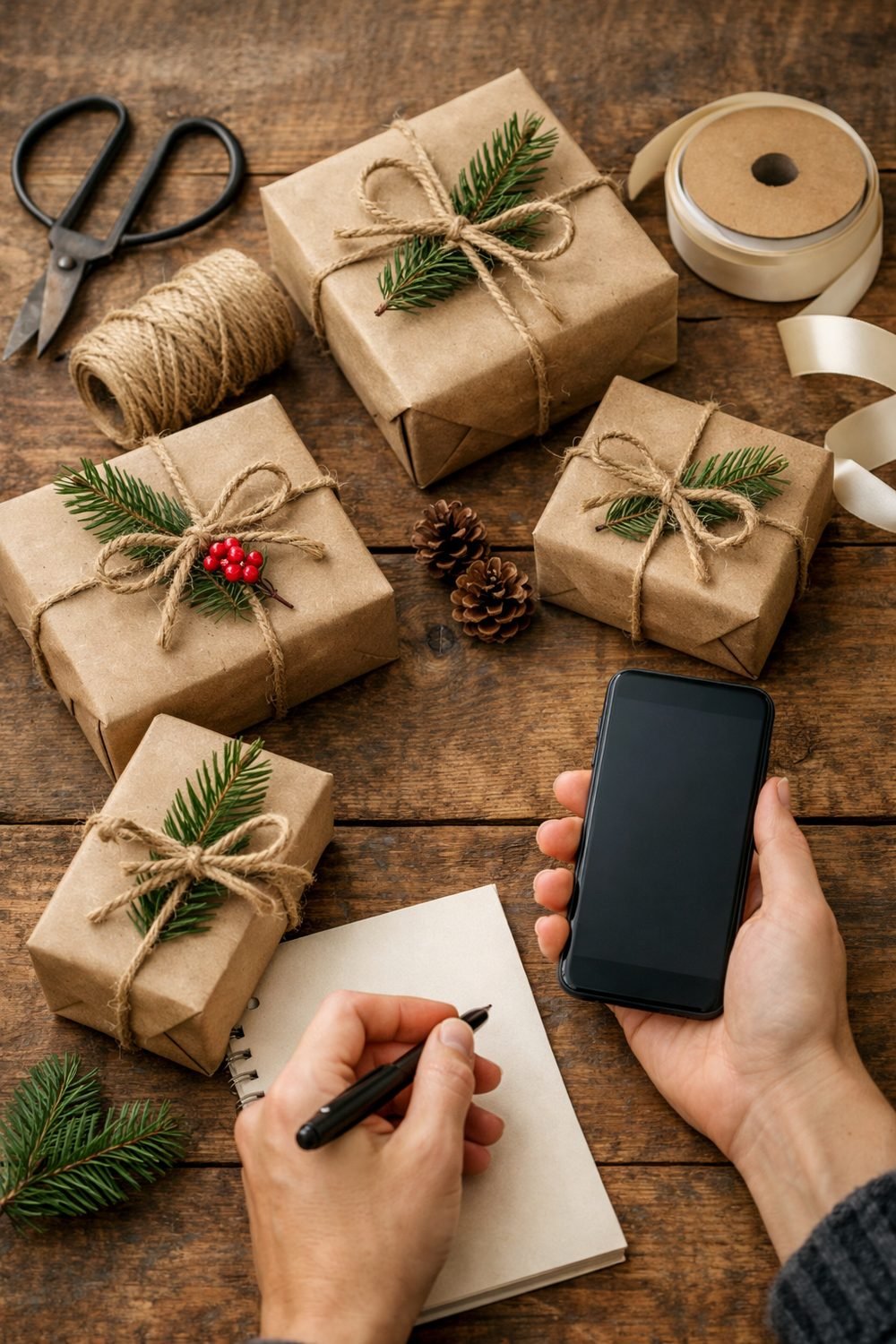
Not on purpose. It's easy to grab a book in early November, forget about it, then buy a different one in a panic a week before the holiday. That was the moment I finally made a proper list, and now even my christmas stocking gift ideas go on it.
A holiday gift list, plus a budget and a deadline, makes shopping go a lot more smoothly. None of it is fancy. You can set the whole thing up in one evening with a cup of tea and whatever paper or app you already use. Here's a simple system you can use, step by step.
Short on time? Our top picks: Google Sheets, Notion, Apple Notes and AnyList. See all picks
1. Start with the people, not the gifts
Before you look at a single store, write down everyone you want to give something to. Family, friends, the neighbor who feeds your cat, your kid's teacher. Get every name out of your head and onto the page.
Next to each name, add a rough budget and two or three gift ideas. They don't have to be good ideas yet. "Likes gardening" or "always cold" is enough to start. You'll be surprised how often a vague note turns into the perfect gift a few weeks later.
It also helps to split your list into groups: close family, friends, and "small thank-you" people. It helps me see where most of the money is going at a glance.
Tip: Keep the list somewhere you'll actually see it. Keep yours on your phone, in an app like Apple Notes, so you can add ideas while you're out, like when your mom mentions her favorite mug just cracked.
2. Set an overall budget you can live with and wrap on time
Once every name has a number next to it, add them all up. Then sit with that total for a minute. Does it feel okay, or does your stomach drop a little?
If it's too high, you've got two choices. Lower a few of the individual budgets, or shorten the list. Neither one makes you a bad person. Plenty of families switch to a gift swap, a "kids only" rule or family gift experiences instead of more stuff, and honestly, most adults are relieved when someone suggests it.
Here's the part people skip: the extras. Wrapping paper, tape, gift bags, cards, stamps and shipping all cost money, and they sneak up on you. Give them their own line in the budget so they don't quietly eat into the gift money.
Tip: Starting early lets you spread the cost across several weeks or even months. Buying one or two gifts a week feels much gentler than buying twenty in one weekend.
3. Track every gift in a simple table
This is the step that saved me from the two-books problem. A basic table works best. Mine has these columns:
- Person
- Gift idea
- Budget
- Actual cost
- Bought
- Wrapped
- Delivered or given
Tick each stage as you go. It's oddly satisfying, and it means you never have to dig through a closet wondering whether you already got something for your aunt.
The "actual cost" column matters more than you'd think. It shows you, in real numbers, whether you're sticking to your plan. If you spend a bit more on one person, you can trim somewhere else before it gets out of hand.
If you'd rather not build the table yourself, our Free Holiday Gift List and Budget Page already has these columns ready to fill in, and you can grab it by joining our email list.
4. Check prices yourself before you buy
This post doesn't list what anything costs, because prices vary by store and change often. Something that's one price on Monday can be different by Friday. The only safe move is to check the seller's page right before you buy.
When I'm comparing, I jot down where I looked and the price I saw, plus the date. It takes ten seconds and stops me from going in circles between three tabs. It also helps if a return comes up later and you need to remember where something came from.
One honest opinion: I think chasing the absolute lowest price is overrated for small gifts. If the difference is tiny and one store is easier, faster or has a better return policy, I just pick that one and move on with my day.
Tip: Read the return policy and delivery info on the seller's page before you pay, especially for clothes and anything with a size.
5. Pick a wrapping day (and stick to it)
Wrapping thirty gifts at midnight on the 23rd is no fun. Ask me how I know. Now I put a wrapping date on the calendar, usually a weekend afternoon about a week or two before I need everything done.
Gather your supplies first: paper, tape, scissors, tags, a pen that actually works. Put on some music or a movie you've seen a hundred times, or play some fun holiday games in the background with the family. Wrap in batches by person so nothing gets mixed up, and write the tag right away. Unlabeled gifts are how your teenager ends up opening the slippers meant for grandpa.
You don't need matching paper or perfect bows. Gift bags and tissue are completely fine, and they're much faster for awkward shapes. You can save the nice wrapping for a few special gifts and use bags for the rest.
Tip: Wrap anything that needs to be shipped first, since it has the earliest deadline.
6. Write down the last safe shipping dates
If any gifts need to travel, find out the last safe shipping date and write it at the top of your list in big letters. Carriers and stores usually post their holiday cutoff dates, so check with whoever you're using rather than guessing.
It's smart to aim a few days earlier than the official cutoff. Holiday mail gets busy, and things go wrong. A package that arrives early just sits under a tree. One that arrives late causes a sad phone call.
If you're ordering online and sending it straight to the person, double-check the address and add a gift note if the store offers one, and look at the carrier's cutoff dates, such as on USPS. Otherwise your cousin might get a mystery box with no clue who sent it.
Tip: Keep tracking numbers in your gift table, right in the "delivered" column. Then you can check on everything in one place.
7. Keep a small backup stash of stocking gift ideas
This one isn't in most planning guides, but it's helped me more than once. Keep two or three small, wrapped, general gifts tucked away. Think a nice candle, a box of chocolates or a cozy pair of socks, the kind of holiday stocking stuffers that always come in handy.
Someone always shows up with a gift you didn't expect, even if all you planned for was holiday party games. A coworker, a new neighbor, a friend's partner. Having something ready means you can say thank you without that awkward "oh, I didn't get you anything" moment.
If nobody needs them, they keep well for birthdays, office swaps or hostess gifts later on, and a photo cup gift is another easy one to keep on hand.
8. Don't forget the thank-you notes
After the holiday, things get busy and blurry fast. Before you forget, jot down who gave you what. Add a little section at the bottom of your gift list just for this, so it's all in the same place.
Then send a short thank-you. It doesn't have to be long or fancy. A few lines in a card, a text, or a quick call is plenty. Mention the gift by name and one thing you like about it. People remember being thanked far longer than you'd expect.
If you have kids, this is a nice habit to share with them. Even a drawing with "thank you" scribbled on it can make a grandparent's week.
Tip: Set a goal to finish thank-yous within a week or two of the holiday, while you still remember the details.
Tools and products that make gift planning easier
You don't need much to run this system, but a few well-known tools can make the list, the wrapping and the shipping feel lighter. Here are some that fit the steps above.
Google Sheets
A good fit if you like building your own gift table with columns for budget, actual cost and status. It works on a phone and a computer, and you can share a sheet with a partner. Check that you're comfortable with a spreadsheet layout before moving everything over.
Notion
Suits people who want a list, notes and checklists in one place. You can set up a simple database for people, gift ideas and thank-you notes. It can feel like a lot at first, so start with a basic page.
Apple Notes
Handy if you want to jot down ideas the moment someone mentions a favorite mug. It's quick and needs almost no setup. Check whether you also use non-Apple devices, since access there is more limited.
AnyList
A shared list app that suits couples or families splitting the shopping. Both people can add and tick off items. Check that everyone involved is happy to install the app.
Scotch Wrapping Tape
A familiar tape brand for wrapping day, including gift-wrap styles that stay nearly invisible on paper. It suits anyone who wraps a lot of gifts in one sitting. Check the tape type on the package so it matches your paper.
Hallmark Cards and Wrap
A long-standing source of cards, gift bags, tags and wrapping paper. It suits you if you want cards and wrap from one place. Look at the range in a store or online before you commit, so you can match sizes to your gifts.
USPS Holiday Shipping Info
Useful if you're mailing gifts within the United States and want to check cutoff dates and tracking. It suits anyone who wants to plan around the last safe shipping day. Check the dates for the exact service you plan to use, since they differ by service.
Check current plans and prices on each brand's own site before you decide.
FAQ
When should I start my holiday gift list?
Earlier than you think. Start making your list in the fall, even if you don't buy anything yet. It gives you time to collect ideas, spread out the cost and avoid last-minute shipping stress.
How do I tell family I want to spend less this year?
Be honest and keep it simple. Suggesting a gift swap, a spending limit, custom holiday ornaments or a "kids only" rule is common, and you might find others feel the same way. Bringing it up early, before people start shopping, makes it easier for everyone.
Should I use paper or an app for my gift list?
Use whatever you'll actually open. Some people love a notebook, others like a spreadsheet such as Google Sheets or a notes app on their phone. The best system is the one you'll keep updating all season.
What if I go over budget?
It happens, so don't beat yourself up. Look at your table and see where you can trim, like choosing simpler wrapping or adjusting a gift you haven't bought yet. Tracking actual costs as you go makes it much easier to catch early.
Your next step
Tonight, before you do anything else, write down every name on your list. That's it. Once the names are out of your head, the rest gets so much easier. If you'd like a head start, join our email list to get the free Holiday Gift List and Budget Page. It has the tracking table, a budget section and a spot for thank-you notes, all ready to print and fill in. Then grab a pen and get your first few names down.
Some links on this site may earn us a commission. Read our disclosure.