Best Games for Family Game Night: A Plain-English Guide
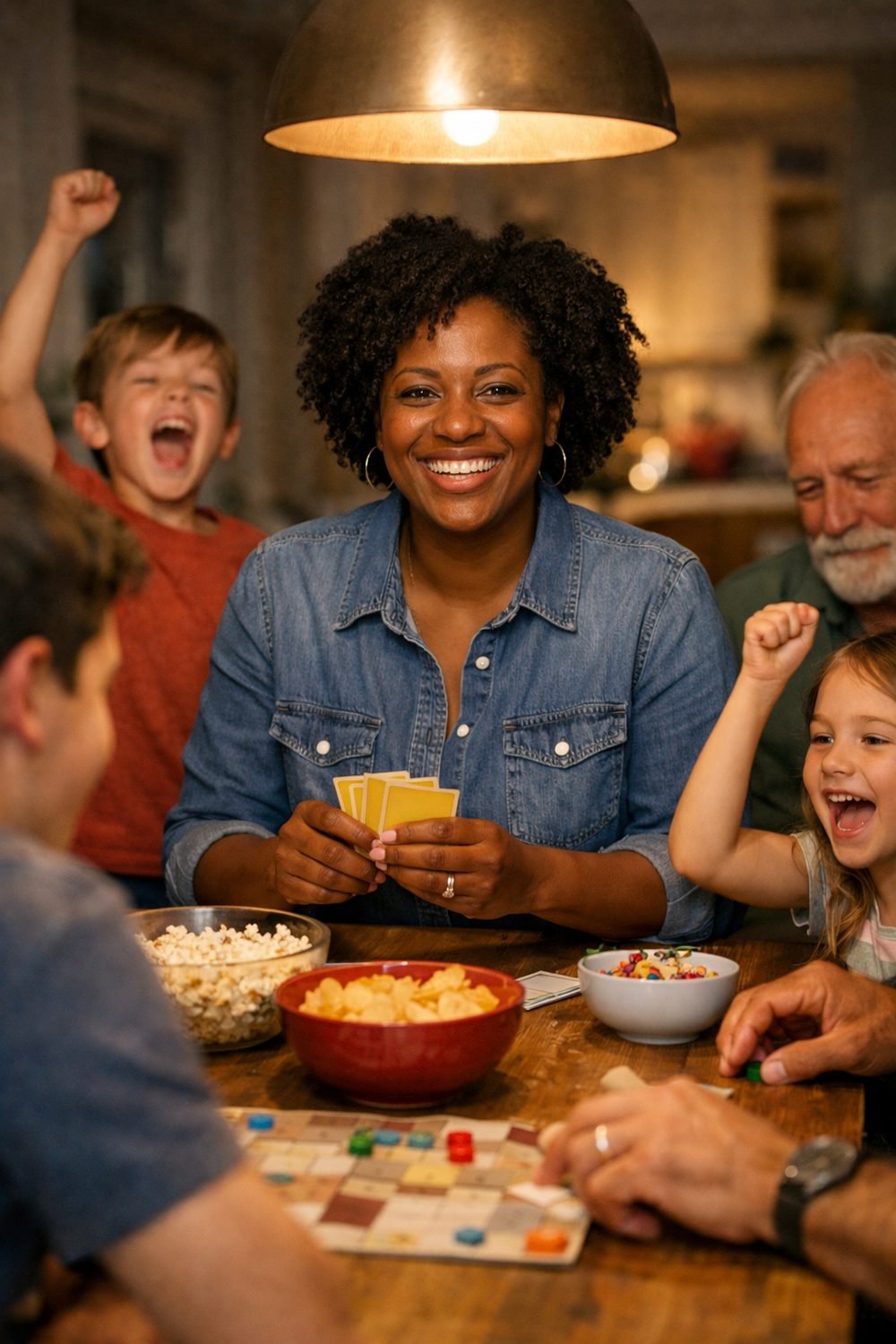
The best games for family game night are the ones everyone can actually join. That sounds obvious, but I've watched plenty of evenings fall apart because someone picked a game that only two people at the table understood. The rest sat there, checking their phones, waiting for it to end.
This guide is about avoiding that. This guide won't hand you a ranked list of brand names and tell you to buy them all. Instead, I'll walk you through how to choose games that fit your family: the ages, the number of people, the mood, even the snacks. By the end, you should be able to stand in a store aisle (or scroll a shopping page) and know pretty quickly what will work for your crew and what won't.
Short on time? Our top picks: Pictionary, Uno, Jenga and Ticket to Ride. See all picks
Quick summary
- Choose games based on your youngest regular player, not your oldest.
- Check the player range on the box and pay attention to the lower and upper numbers.
- Pick a theme your family already likes: animals, words, building, drawing or trivia.
- Match the noise level to your home and your evening.
- Set up seating and snacks so hands stay free and cards stay clean.
- Keep a short ten-minute game on hand as a backup.
- Don't buy a stack of new games at once. Start with one or two and see what sticks.
Start with the youngest player when choosing family game night games
This is the rule I wish someone had told me years ago. If your youngest player can't follow the game, the whole night bends around them. Someone has to play their turns for them, explain things over and over, or quietly let them "win" in a way everyone notices.
So flip it around. Find a game the youngest person can follow on their own, then look for ways to keep the older folks interested.
Reading the age label
Most game boxes list a suggested age. It's a decent starting point, but it isn't a law. Some kids are ready for harder games early, and some adults hate anything with more than a page of rules. Treat the age number as "this is when most kids can play without constant help."
If you're not sure, check the seller's page for a description of how a turn works. If you can't explain a turn in one or two sentences, it's probably too much for a young child.
Good games for family game night that stretch across ages
The best family games tend to share a few traits. Turns are short. There's some luck, so a seven-year-old can beat a grandparent without anyone going easy. And there's something to look at or hold, like colorful cards or pieces.
Drawing and guessing games like Pictionary are great for this. So are simple matching games and anything where you stack or build. Little kids enjoy the physical part, and adults get to laugh at their own wobbly towers.
Count your group before you shop for games for game night with friends
Every box lists a player range, like "2 to 6 players." Most people glance at it and move on. It's worth reading it twice.
Here's why. A game that says "2 to 6" might play beautifully at four and drag at six. More players usually means longer waits between turns. For kids, a long wait is where the wiggling, wandering off and arguing starts.
Small groups (2 to 4)
With a small group, you can pick games that have a bit more thinking in them. Everyone gets frequent turns, so a slower game still feels lively. Card games and tile-laying games work well here.
Big groups (5 and up) and fun game night games
For bigger gatherings, think about team games or games where everyone plays at the same time. Charades-style games, word guessing in teams, and quick trivia rounds all handle a crowd. Nobody sits out for long, and the shy players can hide a little inside a team, which some of them really appreciate.
If your group size changes a lot, like when cousins visit for the holidays, it's worth owning one game for small nights and one for big ones. That's honestly enough for most families.
Pick a theme your family already likes
You don't have to convince anyone to love a new hobby. Just look at what your family already talks about at dinner.
Here's how I'd match interests to game types:
- Animal lovers: matching games, memory games, and simple card games with animal art.
- Word people: spelling games, word-building tiles, or guessing games where you describe a word without saying it.
- Builders and tinkerers: stacking games, tile placement, or anything where you create something on the table.
- Know-it-alls (said with love): trivia, especially versions with questions sorted by age.
- Artsy kids: drawing and guessing games.
A small example from my own table
Some kids can't sit through a single round of anything with a board. But hand him a pencil and ask him to draw "a dog riding a bike" in thirty seconds and he's the happiest kid alive. We stopped fighting it. Drawing games became our default when he visits, and the evenings got a lot easier.
That's the point of theme. It's less about the game itself and more about giving people a reason to lean in.
Think about noise and energy for fun games for family game night
Some games are calm. Some are loud. Neither is better, but picking the wrong one for the moment can sink your night.
Calm games
Quiet games are good for weeknights, small apartments, or when someone's asleep down the hall. Think tile games, quieter card games, or puzzles that a whole family works on together. These also suit kids who get overwhelmed by shouting and fast action.
Loud games
Fast reaction games like Dobble, team guessing, and anything with a timer tend to get noisy. Expect yelling, laughing and at least one dispute about who slapped the card first. They're perfect for holidays and weekend afternoons. They're less perfect at 8:30 p.m. on a school night when you want everyone winding down.
A lot of families over-buy loud party games because they look fun in the store. Then they realize most of their game nights are quiet weeknights. If you can only get one, think about when you'll actually play.
How to compare two games side by side
When I'm stuck between two options, I run through a few quick questions. It takes about two minutes and saves a lot of regret.
- Can the youngest player take a turn on their own?
- How long does one game last? (Check the box or seller's page.)
- Does it work well at the number of people we usually have?
- Is there some luck, so newer players have a real chance?
- Would we want to play it again next week?
That last one matters more than people think. A game that's a blast once but feels the same every time ends up in the closet. Games with lots of cards, random setups or open-ended drawing and guessing tend to stay fresh longer.
A quick comparison
Say you're choosing between a trivia game and a drawing game for a family with kids aged six and ten. Trivia can be tough on the six-year-old unless it has kid-level questions. The drawing game, on the other hand, lets the younger child play fully, since nobody expects great art. For that family, I'd lean toward drawing. For a family with teens, trivia might win easily.
There's no single right answer. The goal is to pick what fits your table.
By the way, if you're shopping for games as gifts this season, our free Holiday Gift List and Budget Page can help you keep track of who's getting what and how much you're spending.
Plan snacks and seating
This part gets skipped, and then everyone's playing cards with buttery fingers.
Snacks that play nice
Pick foods you can eat without getting your hands greasy or sticky. Grapes, pretzels, cut-up veggies, and crackers are all easy. You can skip popcorn with butter, cheesy chips, and anything with a dipping sauce placed near the cards. You'll thank yourself when your cards still look decent a year from now.
Another trick: put snacks on a separate side table or tray. Keeps the play area clear and gives fidgety kids a reason to get up and stretch.
Seating
Make sure everyone can reach the middle of the table. Small kids might need a cushion or to kneel on their chair. If you're playing on the floor, a big blanket marks the "game zone" and keeps pieces from rolling under the couch.
Also, sit the youngest player next to a patient adult. Not to play for them, just to help read a card or remind them whose turn it is.
Keep a short backup game ready
Every family needs one ten-minute game in reserve. Here's when you'll use it:
- The main game ends earlier than expected and nobody wants to stop.
- Someone's getting cranky and you need a quick reset.
- Guests are arriving and you need to keep early kids busy.
- You only have a few minutes before bedtime.
Short card games for game night, such as Uno, are perfect for this. They fit in a coat pocket, travel well to restaurants and grandma's house, and take almost no setup.
Printable games count too
You don't always need a boxed game. Printable games are handy for holidays or parties when you want something themed. We have a Christmas Party Games Printable Pack below this post that some readers use as their holiday backup. You print what you need, and if a page gets spilled on, you just print another.
Best game night games for adults
Not every game night includes kids. Sometimes it's just you and a partner after bedtime, or a couple of friends over.
For two adults, I'd skip anything too heavy on a weeknight, and date night games work best when they stay short and light. You're tired. A short card game or something conversational fits better. Conversation games are underrated here, and a date night questions game has no winner, no score, and nothing to clean up. If you like that idea, our Conversation Cards for Couples: 100 Questions set is below this post. It's a calm option for a night when you want to talk more than compete.
Common mistakes to avoid
These are common mistakes, so no judgment here.
Buying too many games at once
A stack of new games looks exciting, but it usually means half of them never get opened. Start with one or two. Play them a few times. Then decide what's missing.
Picking for the adults
It's tempting to buy the game you want to play. If the kids can't follow it, though, nobody has fun, including you.
Explaining every rule up front
Long rule speeches lose people fast. Explain enough to start, then teach the rest as it comes up. Most games make more sense once you're actually playing.
Playing too long
Stop while people are still having fun. If everyone groans when you pack up, that's a good sign. They'll want to play again. If they're relieved, you went too long.
Letting one person dominate
Every family has a super-competitive member. Team games and luck-based games help balance things out. So does a gentle house rule about not gloating.
Ignoring the box contents
Check what comes in the box before you buy, especially for gifts. Some games need extra items like pencils, timers or batteries. The seller's page usually lists this.
Games worth a look for family game night
These are well-known games that tend to suit different families and group sizes. Use the notes below to decide which one fits your table.
Pictionary
A classic drawing and guessing game that suits mixed ages, since nobody expects great art. Check the version you're buying, as some editions are aimed at kids and others at older players.
Uno
A simple card game that suits families with younger kids and doubles as a handy short backup. Check the rules for the edition you pick, because house rules vary a lot between families.
Jenga
A stacking game that suits families who like something physical to hold and laugh at. Check that you have a flat, steady surface, since a wobbly table makes it frustrating.
Ticket to Ride
A friendly board game that suits families with older kids and adults who want a little strategy. Check the age and play time on the box, as it asks for more patience than a quick card game.
Codenames
A team word game that suits bigger groups, teens and adults who enjoy clue-giving. Check whether a family-friendly version exists if you have younger players.
Dobble
A fast matching card game that suits a wide range of ages and works well as a ten-minute backup. Check the player range and which mini-games are included before choosing.
Scrabble
A word-building game that suits families with readers and spellers. Check whether a junior edition fits your youngest player better.
Check current plans and prices on each brand's own site before you buy.
FAQ
How many games does a family really need?
Fewer than you'd think. One game for small nights, one for big groups, and a short backup game covers most families. You can always add more once you know what everyone likes.
What if my kids are far apart in age?
Look for games with some luck, team play, or drawing and guessing. These let younger kids compete for real while older kids stay engaged. Pairing a little one with an older sibling as a team also works well.
How long should a family game night last?
For young kids, 30 to 45 minutes is often plenty. Older kids and adults can go longer, but it's better to stop early than to drag things out. Leaving people wanting more keeps game night something they look forward to.
Are printable games worth it?
They can be, especially for holidays and parties where you want a theme. They're easy to replace and you only print what you'll use. They won't replace a favorite boxed game, but they make a good backup.
Your next step
If you're planning game night as part of holiday gifting, start by grabbing our free Holiday Gift List and Budget Page. It'll help you jot down who you're shopping for and keep your spending in check. Then take a look at the Conversation Cards for Couples and the Christmas Party Games Printable Pack below this post, if either sounds like a fit for your family. Pick one game, set out some clean snacks, and see who shows up to the table.
Printables and tools that can help
Conversation Cards for Couples: 100 Questions
One hundred printable question cards for date nights and quiet...
See detailsChristmas Party Games Printable Pack
Printable bingo and other party games for a family Christmas...
See details